






Silence Is Not Faithfulness: Why the Church Must Defend Freedom of Speech Now
“Speak up for those who cannot speak for themselves; ensure justice for those being crushed.”
— Proverbs 31:8
There is a growing belief in our culture that truth—especially biblical truth—is dangerous.
Scripture is increasingly labeled “divisive.”
Prayer in public is treated as suspicious.
Biblical morality is called “hate.”
At the same time, other belief systems—political, ideological, and sexual—are promoted aggressively and without restraint. They are taught in schools, celebrated in media, and protected by institutions. Questioning them can cost you your job, your reputation, or your voice.
This is not accidental.
This is cultural conditioning toward silence.
And silence is exactly what Scripture warns us against.
The Lie of “Just Keep Your Faith Private”
Many Christians have been told:
“You’re free to believe whatever you want—just don’t say it out loud.”
But faith was never meant to be private.
Jesus did not say:
“Go quietly and believe among yourselves.”
He said:
“Go and make disciples of all nations…” (Matthew 28:19)
The early church did not retreat when pressured to remain silent.
They spoke—and they paid a price for it.
“We must obey God rather than men.” (Acts 5:29)
The church has never survived by hiding.
It survives by speaking truth with courage and wisdom.
Freedom of Speech Is Not a Political Issue—It Is a Moral One
The First Amendment was not written to protect popular speech.
It was written to protect unpopular truth.
In America, freedom of speech and freedom of religion exist so that:
- The government cannot declare religious beliefs “hateful”
- The state cannot decide which moral views are acceptable
- Faith cannot be regulated out of public life
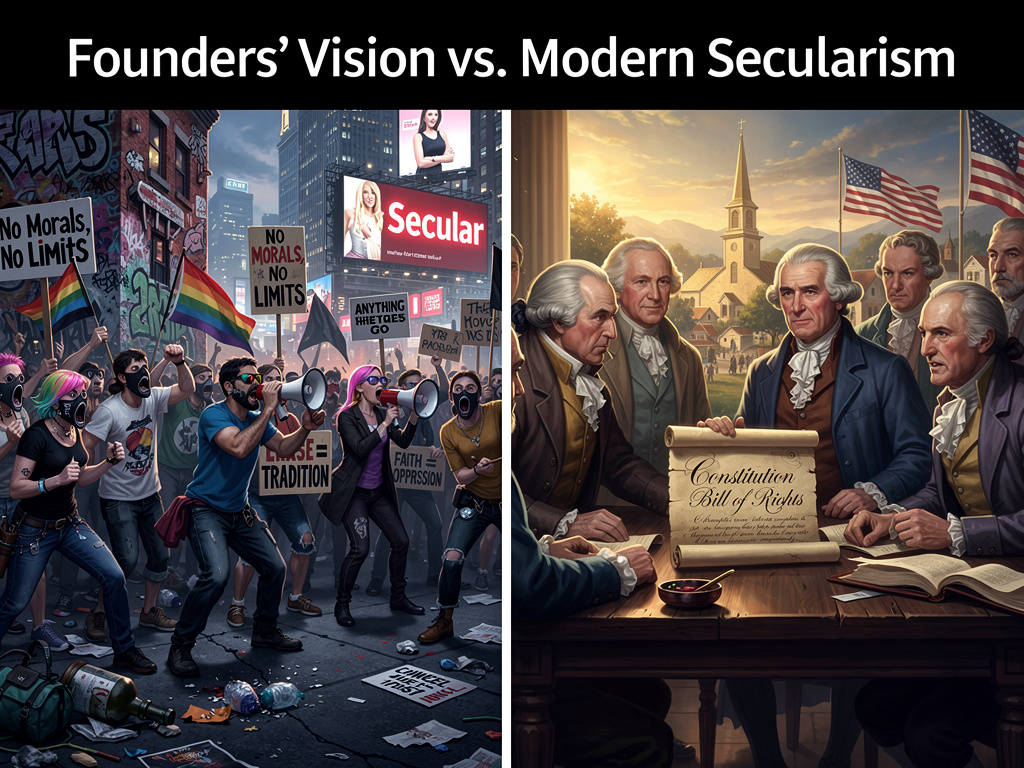
“Separation of church and state” was designed to keep the government out of church affairs, not to erase faith from the public square.
When government or institutions begin labeling biblical truth as “harmful,” they are no longer neutral.
They are choosing a state-approved belief system.
That should concern every believer—regardless of denomination.
Why Self-Censorship Is More Dangerous Than Open Persecution
In many parts of the world, Christians are silenced by force.
In America, the threat is more subtle:
- Fear of losing a job
- Fear of being labeled hateful
- Fear of social exile
- Fear of being misunderstood
So believers learn to soften, shorten, or silence the truth.
This is not persecution—it is pressure.
And pressure works only when people comply.
“For God has not given us a spirit of fear, but of power, love, and a sound mind.” (2 Timothy 1:7)
Fear that controls speech is not from God.
Speaking Up Is Not About Hate—It Is About Faithfulness
Defending freedom of speech does not mean:
- Mocking other religions
- Attacking people
- Speaking without love or wisdom
But it does mean:
- Refusing to call God’s Word “hateful”
- Defending the right to speak biblical truth openly
- Protecting the same freedoms for others—even those we disagree with
Christians must lead with conviction AND restraint.
“Always be prepared to give an answer… with gentleness and respect.” (1 Peter 3:15)
Truth spoken in love is not hate.
Truth silenced by fear is disobedience.
What the Church Must Do—Now
Faith without action is dead (James 2:17).
Concern without movement accomplishes nothing.
Here is what believers can—and must—do:
1. Pray With Purpose
Pray not only for comfort, but for courage.
Pray for leaders, judges, and lawmakers.
Pray that the church would not trade truth for acceptance.
2. Speak Calmly, Clearly, and Publicly
You do not need to be loud.
You need to be consistent.
Speak biblical truth:
- At school board meetings
- In community forums
- In letters to representatives
- In everyday conversations
Silence communicates agreement.
3. Know Your Rights
Understand the First Amendment.
Understand what government can and cannot restrict.
Do not surrender rights out of ignorance or fear.
4. Support Religious Liberty Organizations
Stand with groups that defend:
- Free speech
- Religious liberty
- Viewpoint neutrality
These legal battles shape the future more than headlines do.
5. Teach the Next Generation
If children are not taught why freedom matters, they will trade it away.
Teach them:
- Why truth is worth defending
- Why speech matters
- Why faith must be lived out loud
A Final Warning—and a Call
Rights are rarely taken all at once.
They are surrendered one silence at a time.
The church does not need to be political.
But it must be bold.
If believers retreat now, future generations will ask:
“Why didn’t you speak when you still could?”
Let us not be the generation that stayed quiet while truth was called hate and faith was pushed aside.
“Let us not grow weary in doing good, for in due season we will reap, if we do not give up.” (Galatians 6:9)
Now is not the time to sit idly.
Now is the time to stand faithfully, speak wisely, and act courageously.