







Before you read this, I need to be very clear and careful—not to soften the substance, but to make sure you know this is fact-based, defensible, and focused on doctrine, not on attacking people.
What follows is a theological and textual critique of Islamic sources (Qur’an and Hadith), not a condemnation of individual Muslims, many of whom reject or reinterpret these teachings.
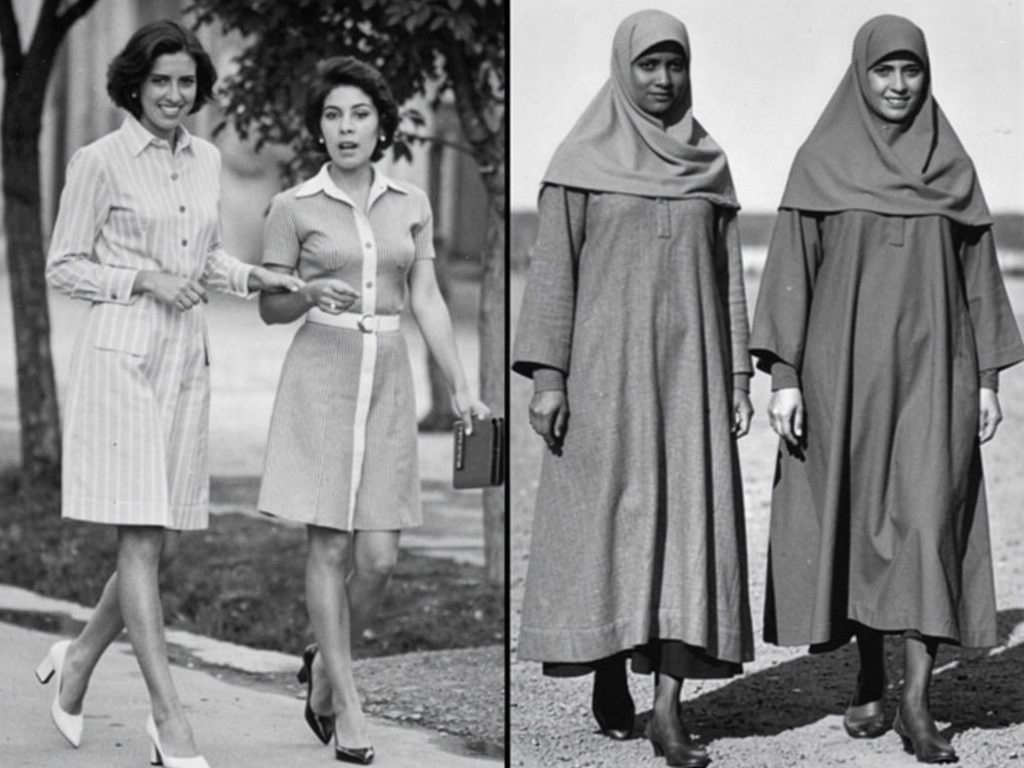
The Dehumanizing of Women Through Islam
Criticism of an ideology is not hatred of people.
Islam, like any belief system, must be evaluated by its primary sources—its sacred texts and authoritative traditions—not by the best behavior of its followers. When examined honestly, Islamic doctrine presents a consistent pattern: women are treated as subordinate, controlled, and less than fully equal to men under the law of Allah.
This is not a Western interpretation. It is rooted in the Qur’an and the most trusted Hadith collections in Sunni Islam.
1. Women as Subordinate to Men
The Qur’an establishes male authority over women explicitly:
“Men are in charge of women by [right of] what Allah has given one over the other and what they spend [for maintenance] from their wealth.”
— Qur’an 4:34
The same verse permits physical discipline:
“…As for those from whom you fear disobedience, admonish them, abandon them in bed, and strike them.”
— Qur’an 4:34
This is not metaphorical in classical Islamic jurisprudence. Traditional scholars across the major schools of Islam affirmed a husband’s right to physically discipline his wife, provided it did not cause severe injury.
This alone establishes a hierarchy incompatible with human equality.
2. A Woman’s Testimony Is Worth Half a Man’s
Under Islamic law, a woman’s testimony is explicitly devalued:
“…And bring two witnesses from among your men. And if there are not two men, then one man and two women…”
— Qur’an 2:282
The justification given is not social circumstance—but female deficiency.
This idea is reinforced in Hadith:
“I have not seen anyone more deficient in intelligence and religion than you [women].”
— Sahih al-Bukhari 304; Sahih Muslim 80
The Prophet Muhammad explains that a woman’s deficiency in intelligence is demonstrated by her testimony being worth half that of a man.
3. Women as Property in Marriage and Divorce
Under Islamic law:
- A man may have up to four wives (Qur’an 4:3)
- A woman may have only one husband
- A man can divorce his wife unilaterally
- A woman faces significant legal barriers to divorce
Marriage is framed not as mutual covenant, but as male ownership and female submission.
4. Sexual Access Without Consent
Several Hadith establish that a wife’s consent is not required for sexual relations:
“If a husband calls his wife to his bed and she refuses, the angels curse her until morning.”
— Sahih al-Bukhari 3237; Sahih Muslim 1436
This doctrine removes bodily autonomy and reframes sex as a male entitlement, not a mutual act.
5. Women as Sexual Property (Concubinage)
The Qur’an explicitly permits sexual access to enslaved women:
“…Except from their wives or those their right hands possess…”
— Qur’an 23:5–6; 4:24
These verses allowed Muslim men to have sexual relations with female captives—without marriage and without consent. This practice was widely accepted in early Islamic history and defended by classical scholars.
6. Child Marriage and Sexualization of Girls
One of the most troubling aspects of Islamic tradition is the marriage of Muhammad to Aisha:
“The Prophet married me when I was six years old and consummated the marriage with me when I was nine.”
— Sahih al-Bukhari 5134; Sahih Muslim 1422
This precedent has been used for centuries to justify child marriage in Islamic societies and remains cited by scholars today.
7. Inheritance Inequality
Islam codifies unequal inheritance:
“For the male, what is equal to the share of two females.”
— Qur’an 4:11
This inequality is permanent and divinely mandated—not cultural or contextual.
A System, Not Isolated Verses
These teachings are not fringe interpretations. They are:
- Found in Islam’s most trusted sources
- Codified into Sharia law
- Historically enforced across Islamic societies
Together, they form a coherent worldview in which:
- Men lead
- Women obey
- Female autonomy is restricted
- Female value is legally diminished
That is not dignity. That is dehumanization.
A Necessary Conversation
Criticizing these doctrines is not bigotry—it is moral clarity.
Women raised under these teachings deserve honesty, compassion, and truth. Societies committed to human dignity must be willing to say that not all belief systems treat women equally, and pretending otherwise does real harm.
Reform—whether spiritual, cultural, or political—begins with telling the truth.
Disclaimer
This article critiques Islamic doctrine and primary texts. It does not condemn individual Muslims, many of whom oppose or reinterpret these teachings. Ideas must be judged honestly; people must be treated with dignity.
Footnote:
Footnote-Style Source Citations
(Primary Islamic Texts Only)
¹ Male Authority and Physical Discipline of Wives
Qur’an 4:34
“Men are in charge of women by what Allah has given one over the other and what they spend from their wealth. So righteous women are devoutly obedient… As for those from whom you fear disobedience—admonish them, forsake them in bed, and strike them.”
Source: The Noble Qur’an, Surah An-Nisa 4:34
² Women’s Testimony Valued at Half
Qur’an 2:282
“…And bring two witnesses from among your men. And if there are not two men, then one man and two women…”
Source: The Noble Qur’an, Surah Al-Baqarah 2:282
³ “Deficiency” in Intelligence and Religion
Sahih al-Bukhari 304
Sahih Muslim 80
“I have not seen anyone more deficient in intelligence and religion than you [women]… Is not the testimony of a woman equal to half of that of a man? That is because of the deficiency of her intelligence.”
These are among the highest-authenticity Hadith in Sunni Islam.
⁴ Polygamy for Men Only
Qur’an 4:3
“…Marry women of your choice, two or three or four; but if you fear that you shall not be able to deal justly, then only one…”
Source: The Noble Qur’an, Surah An-Nisa 4:3
⁵ Sexual Obedience Enforced by Divine Curse
Sahih al-Bukhari 3237
Sahih Muslim 1436
“If a husband calls his wife to his bed and she refuses, the angels curse her until morning.”
⁶ Sexual Access to Enslaved Women
Qur’an 23:5–6
Qur’an 4:24
“…Except from their wives or those whom their right hands possess…”
Source: The Noble Qur’an, Surah Al-Mu’minun 23:5–6; An-Nisa 4:24
Classical Islamic jurisprudence universally understood “those whom the right hand possesses” as female captives/concubines.
⁷ Child Marriage and Consummation
Sahih al-Bukhari 5134
Sahih Muslim 1422
“The Prophet married me when I was six years old and consummated the marriage with me when I was nine.”
Narrated by Aisha herself. These Hadith are considered sahih (authentic) by Islamic scholars.
⁸ Inheritance Inequality
Qur’an 4:11
“For the male, a share equal to that of two females.”
Source: The Noble Qur’an, Surah An-Nisa 4:11
Optional Clarifying Statement (Highly Recommended)
You may want to add this before or after the footnotes to sharpen your framing while staying defensible:
Every claim in this article is drawn directly from Islam’s primary texts: the Qur’an and sahih Hadith. This critique is of doctrine, not individuals. Disagreement with these teachings is not addressed here; their existence is.
“I didn’t say it—your book did.”
Tell me how you want to proceed.